Are Referrals Dead? Why Small Businesses Need Lead Generation in 2026
Are Referrals Dead? Why Small Businesses Need Lead Generation in 2026
You've probably heard someone say that referrals don't work anymore. That word-of-mouth is old school. That you need to be on every social platform, running ads, and basically shouting into the digital void to get customers.
Here's the truth: referrals aren't dead at all. In fact, 82% of small businesses still claim referrals as their main source of new business. Referred customers convert 30% higher than other leads and stick around longer too.
But here's what's also true: relying only on referrals is like having a business with one leg. It works, but it's shaky.
Why Referrals Alone Aren't Enough Anymore
Let's be real about what happens when you only depend on referrals:
You're at the mercy of timing. Your best clients might love you, but they don't need to talk about your services every week. Sometimes they go months without meeting someone who needs what you do.
You can't predict your income. Some months you get three referrals, others you get zero. Try explaining that to your mortgage payment.
You have zero control. You can't turn up the volume when you need more clients. You just have to wait and hope.
Your growth hits a ceiling. There's only so many people in your current network. Eventually, you've tapped out your immediate circle.

This is where lead generation comes in. Not to replace referrals, but to work alongside them.
What Lead Generation Actually Is (And Why It's Not Scary)
Lead generation sounds like some complex marketing buzzword, but it's actually pretty simple. It's just attracting potential customers who don't know you yet and getting them interested enough to start a conversation.
Think of it like this: referrals are like friends introducing you at a party. Lead generation is like being interesting enough that strangers come up and start talking to you.
For small businesses, lead generation might look like:
A plumber who writes helpful blog posts about common pipe problems
A coach who shares quick tips on LinkedIn that get people commenting
A consultant who offers a free checklist that solves a real problem
A service provider whose website actually explains what they do and why it matters
It's not about becoming a content creator or marketing guru. It's about making it easy for the right people to find you when they need what you offer.
The Small Business Advantage You're Not Using
Here's something big companies don't want you to know: small businesses actually have huge advantages when it comes to lead generation.
You're not a faceless corporation. People want to work with real humans they can trust. You can respond faster, be more personal, and actually care about each customer.
But most small businesses don't leverage this. They think lead generation is only for companies with massive marketing budgets and dedicated teams.
Wrong.

The best lead generation for small businesses is simple, authentic, and helpful. You don't need fancy funnels or complex automation. You just need to be where your ideal customers are and provide value before asking for anything.
How Modern Lead Generation Actually Works
Let's break down what effective lead generation looks like for a small business in 2026:
Step 1: Know exactly who you're trying to reach. Not "anyone who needs my service" but "business owners with 5-15 employees who struggle with X specific problem."
Step 2: Create something genuinely helpful. This could be a guide, checklist, mini-course, or even just consistently helpful social media posts. The key is solving a real problem your ideal customers have.
Step 3: Make it easy for people to find you. This means having a website that actually explains what you do, being active where your customers spend time, and showing up consistently.
Step 4: Capture interest when it happens. When someone visits your website or engages with your content, have a simple way for them to get more value from you (like a newsletter, free resource, or consultation).
Step 5: Follow up without being pushy. Most small businesses are terrible at this. They either don't follow up at all, or they immediately try to sell. Instead, keep providing value until they're ready to buy.
Why You Need Both Referrals AND Lead Generation
Smart small business owners don't choose between referrals and lead generation. They use both.
Referrals give you high-quality leads who already trust you. These customers typically have the highest lifetime value and lowest acquisition cost.
Lead generation gives you control and predictability. When you need more customers, you can create more content, be more active on social media, or run targeted ads.
Together, they create what every small business owner wants: steady, predictable growth that doesn't depend on luck.
The Technology That Makes It All Work
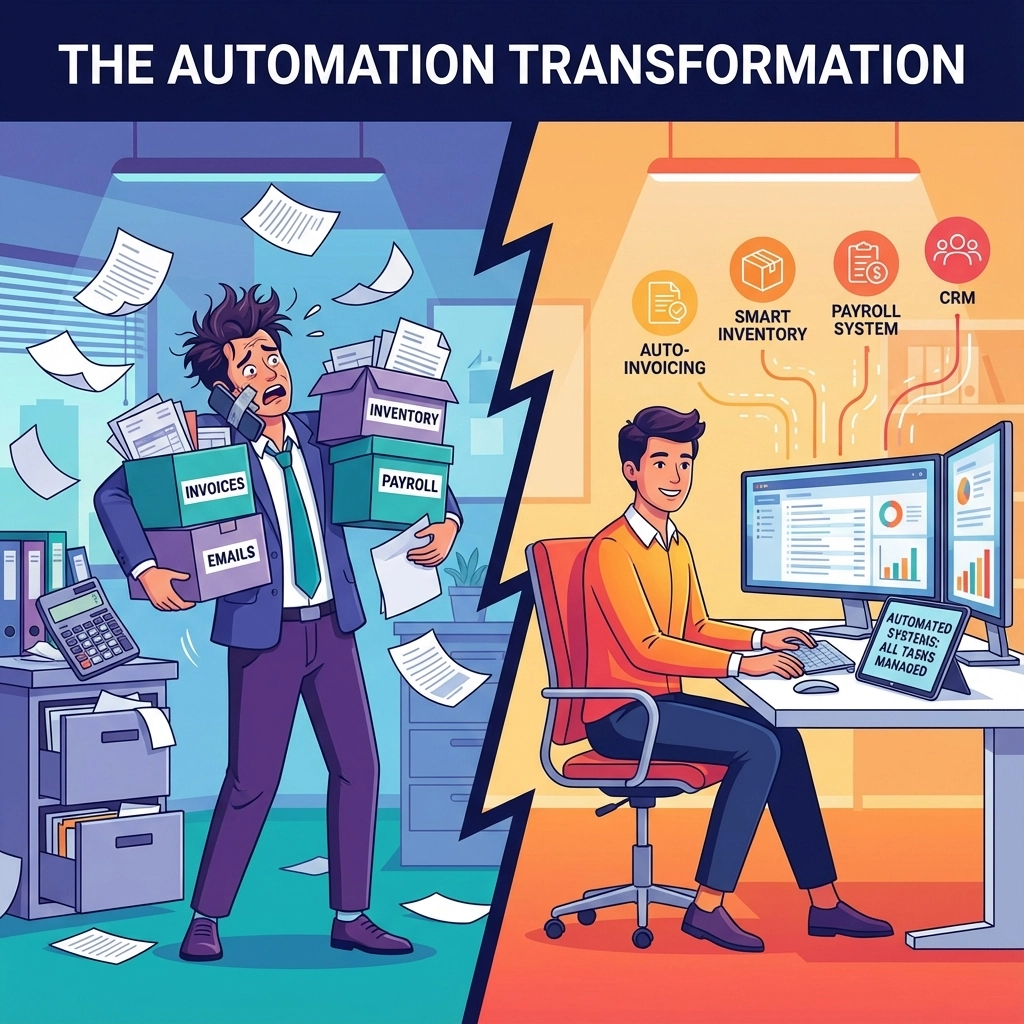
This is where systems like Logic Hub come in. You don't need to be a tech expert to set up lead generation that works.
Modern automation tools can handle the repetitive stuff:
Following up with website visitors
Sending helpful emails to people who downloaded your free guide
Tracking which marketing efforts actually bring in customers
Integrating everything with your existing CRM or contact management
The goal isn't to replace human connection. It's to make sure no potential customer falls through the cracks while you're busy serving existing clients.
Getting Started Without Overwhelm
If you're ready to add lead generation to your referral strategy, start simple:
Week 1: Figure out exactly who your ideal customer is and what problem keeps them up at night.
Week 2: Create one piece of helpful content that solves that problem. This could be a blog post, video, or simple PDF guide.
Week 3: Set up a basic system to capture interest when people find your content. Even something as simple as a "get our weekly tips" email signup works.
Week 4: Start promoting your helpful content where your ideal customers spend time. This might be LinkedIn, local Facebook groups, or industry forums.
The key is starting small and building consistency. You don't need to be everywhere at once.
The Business Stability You've Been Looking For
Here's what changes when you have both strong referrals and effective lead generation:
Predictable income. You're not waiting for the referral gods to smile on you. You can actively generate opportunities when you need them.
Better clients. When people find you through your helpful content, they're already primed to see you as an expert. They come in with higher trust and clearer expectations.
Less hustle. Instead of constantly networking and hoping someone mentions your name, your content and systems work for you 24/7.
Scalable growth. When you want to grow, you can double down on what's working. When you need to slow down, you can dial it back.

The Reality Check
Will lead generation replace referrals? No. Will it eliminate all your marketing challenges? Also no.
But will it give you more control over your business growth and reduce the anxiety that comes with unpredictable income? Absolutely.
The small businesses thriving in 2026 aren't the ones with the biggest marketing budgets. They're the ones who've figured out how to combine the trust-building power of referrals with the predictability of modern lead generation.
You don't need to become a marketing expert overnight. You just need to start thinking like someone who deserves to be found by the right customers.
Because here's the thing: your ideal customers are out there right now, searching for someone exactly like you. The question is whether they'll find you or your competitor.
Ready to build a lead generation system that actually works for small businesses? Check out how Growth Logic helps service-based businesses create predictable growth without the marketing overwhelm.

© 2025 - All Rights Reserved.
Facebook
Instagram
LinkedIn