Why Everyone Is Talking About Smart Forms (And You Should Too)
Why Everyone Is Talking About Smart Forms (And You Should Too)

You know that feeling when you lose a potential client because your booking form was too confusing? Or when you spend half your morning sorting through incomplete contact forms? Yeah, that's exactly why smart forms are having their moment right now.
If you're running a service business, whether you're a physiotherapist, salon owner, life coach, or freelance designer, you're probably dealing with the same frustrating cycle. Someone visits your website, starts filling out your contact form, gets confused or overwhelmed, and just... leaves. Gone. Another potential client lost to a clunky form.
Smart forms are changing that game completely. They're not just "better forms", they're actually intelligent tools that adapt to your visitors and do the heavy lifting for your business.
What Makes a Form "Smart" Anyway?
Think of smart forms as your most helpful team member who never takes a day off. Instead of presenting every visitor with the same static list of questions, smart forms actually think about what each person needs.
Here's how they work their magic: If someone selects "massage therapy" from your services dropdown, the form automatically shows relevant follow-up questions about preferred pressure, problem areas, or previous injuries. If they choose "hair color consultation," completely different questions appear: previous treatments, desired outcome, allergies.
This isn't just fancy tech showing off. Research from the Nielsen Norman Group shows that adaptive forms can increase completion rates by up to 25% because people only see questions that actually matter to them.

The Real Problems Smart Forms Solve for Service Businesses
Let's be honest about what's really happening with traditional forms on service websites. You set up a basic contact form thinking you're making it "simple," but you're actually creating a bunch of hidden problems.
The Information Gap Problem: Your basic form asks for name, email, and message. Great! Except now you're playing 20 questions via email or phone to actually understand what the client needs. A massage therapist doesn't need the same information as someone booking a business coaching session.
The Overwhelm Factor: You try to solve the information gap by adding every possible question upfront. Now your form looks like a government application and scares people away before they even start.
The Follow-Up Nightmare: Even when people do submit, you're manually sorting through responses, trying to figure out which service they want, when they're available, and what their budget looks like. Hours of your day disappear into admin work.
Smart forms eliminate all of this by collecting the right information at the right time, automatically organizing responses, and triggering appropriate follow-up sequences.
How One Salon Transformed Their Booking Process
Sarah runs a boutique salon in Cape Town with three stylists and an aesthetician. Before implementing smart forms, her booking process was chaos. Clients would call during peak hours, emails got lost in her inbox, and she spent evenings manually organizing appointments.
Her old contact form was basic: name, email, phone, preferred service, preferred date. Sounds reasonable, right? Wrong.
Here's what actually happened: Someone would select "hair styling" but Sarah wouldn't know if they wanted a cut, color, special occasion styling, or all three. She'd have to call them back during business hours (when she's busy with other clients) to figure out details, pricing, and timing.
After switching to smart forms, her process became seamless:
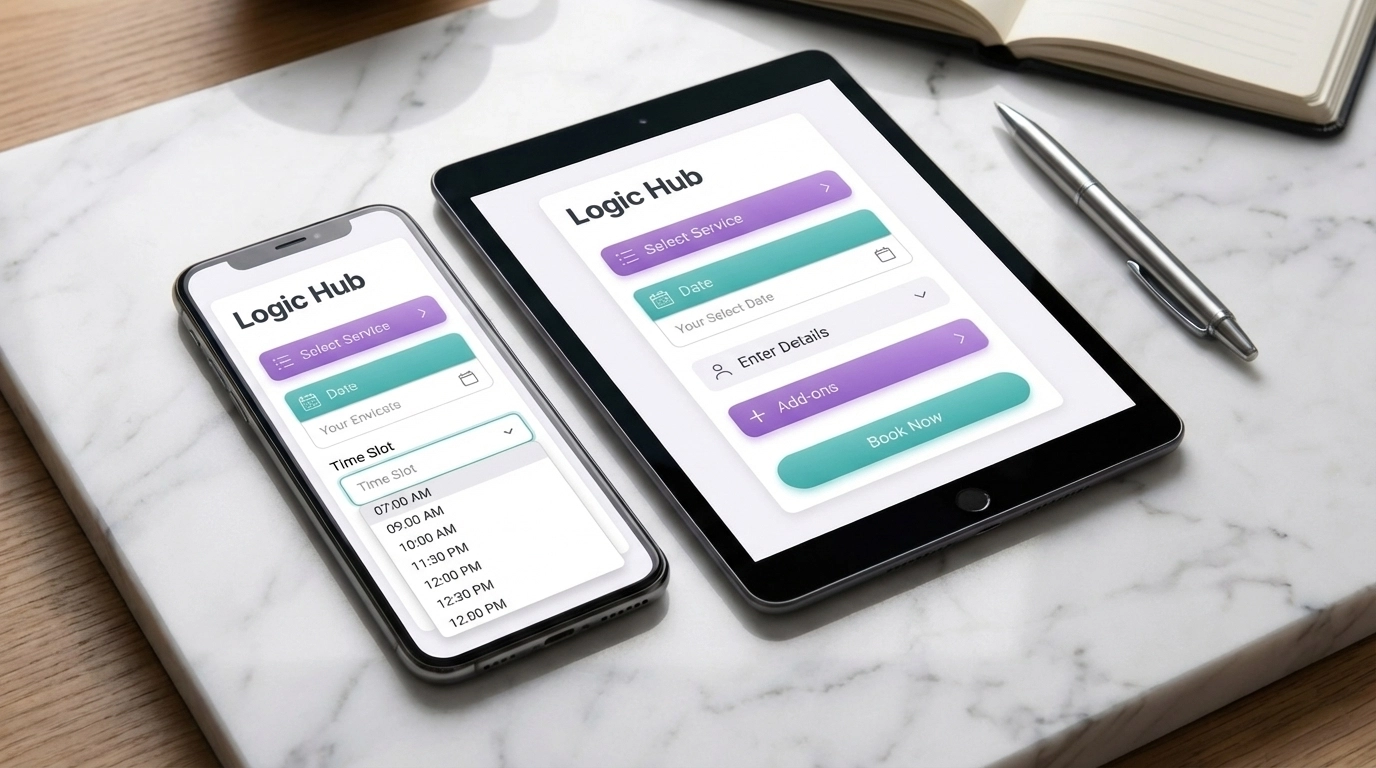
Client selects their service category
Form automatically shows relevant options (cut only, color only, cut + color, etc.)
Based on their selection, they see duration estimates and pricing
Available time slots populate automatically based on the service duration
Follow-up questions appear only when relevant (previous color treatments for color services, inspiration photos for cuts)
The result? Sarah's booking efficiency increased by 40%, client satisfaction scores improved, and she gained back 8 hours per week that used to disappear into phone tag and email management.
But here's the best part: clients love it. They get clear pricing upfront, can see exactly what's available, and feel confident about their booking before they even walk through the door.
The Psychology Behind Why Smart Forms Actually Work
There's real science behind why smart forms convert better than traditional ones. The principle of progressive disclosure: showing information gradually rather than all at once: reduces cognitive load and decision fatigue.
When someone visits your website, they're already making dozens of micro-decisions. Your form shouldn't add to that mental burden. Smart forms guide people through a logical conversation rather than forcing them to process everything simultaneously.
Dr. Steve Krug, in his usability research, found that people make decisions based on satisficing: choosing the first reasonable option rather than finding the perfect one. Smart forms work with this natural behavior by presenting logical next steps rather than overwhelming choice matrices.

What This Means for Your Service Business
If you're a coach, consultant, therapist, or any other service provider, smart forms can transform how you capture and qualify leads. Instead of generic "tell me about your needs" boxes, you can create guided conversations that actually help potential clients articulate what they're looking for.
A business coach might start with "What's your biggest business challenge right now?" with options like "Finding new clients," "Managing team growth," "Improving profitability," or "Planning for scale." Based on the response, the form reveals targeted follow-up questions that help both you and the client understand if you're a good fit.
This pre-qualification saves everyone time. You stop having discovery calls with people who aren't your ideal clients, and potential clients get clarity on whether your services match their needs before they invest time in a conversation.
The Automation Factor
Here's where smart forms really shine for busy service providers: they work while you sleep. When someone completes a form at 11 PM on Sunday, your smart system can:
Automatically send a personalized confirmation email with relevant information
Schedule a follow-up email sequence based on their responses
Add them to your CRM with proper tags and categories
Send you a notification with key details highlighted
Even book them into available calendar slots if that's appropriate for your business
This isn't just about convenience: it's about never losing leads due to delayed responses. Research by the Harvard Business Review shows that companies responding to leads within an hour are 60 times more likely to qualify them than those waiting 24 hours.
Making the Switch Without the Tech Headache
You might be thinking this sounds complicated to set up. It's not. Modern smart form builders are designed for non-technical business owners who need results without the learning curve.
The key is starting with your most common client journey and building from there. What questions do you always end up asking anyway? What information would help you better prepare for initial consultations? What would make the booking process smoother for both you and your clients?
Start simple. Maybe that's just having different form paths for different services, or automatically showing pricing based on selections. You don't need to automate everything on day one.
The Growth Logic Advantage
Tools like Logic Hub make implementing smart forms straightforward for service businesses. Instead of hiring developers or learning complicated software, you get pre-built templates designed specifically for service providers.
The real value isn't in the technology: it's in giving you back time to focus on what you do best: serving clients. When your forms handle initial qualification, information gathering, and follow-up scheduling automatically, you can spend more energy on delivering exceptional service instead of managing admin tasks.
Why Smart Forms Matter More Than Ever
We're living in an attention economy where every interaction counts. Your potential clients are comparing you to businesses that have streamlined, professional systems. If your booking process feels outdated or complicated, people assume your service delivery might be too.
Smart forms signal that you're organized, professional, and respect people's time. They create a positive first impression that carries through the entire client relationship.
More importantly, they give you data. Instead of guessing what your website visitors want, you get clear insights into common requests, popular services, and conversion points. This information helps you refine your offerings and marketing to better serve your market.
Smart forms aren't just a trend: they're becoming the baseline expectation for professional service businesses. The question isn't whether you need them, but how quickly you can implement them to start capturing more leads and serving clients better.
Your competitors are probably still using basic contact forms. That's your opportunity.

© 2025 - All Rights Reserved.
Facebook
Instagram
LinkedIn