What Are Funnels? A Simple Guide for Small Businesses to Convert More Leads
What Are Funnels? A Simple Guide for Small Businesses to Convert More Leads
You've probably heard the word "funnel" thrown around in marketing circles, and maybe you've wondered what all the fuss is about. It's normal to feel like marketing funnels are some complex, corporate-level strategy that's too complicated for your small business. But here's the truth: funnels are actually one of the simplest and most effective ways to turn your leads into paying customers.
Think about it this way: you already have a process for how customers find you and eventually buy from you. A funnel just helps you see that process clearly, improve it, and automate the parts that eat up your time.
What Exactly Is a Marketing Funnel?
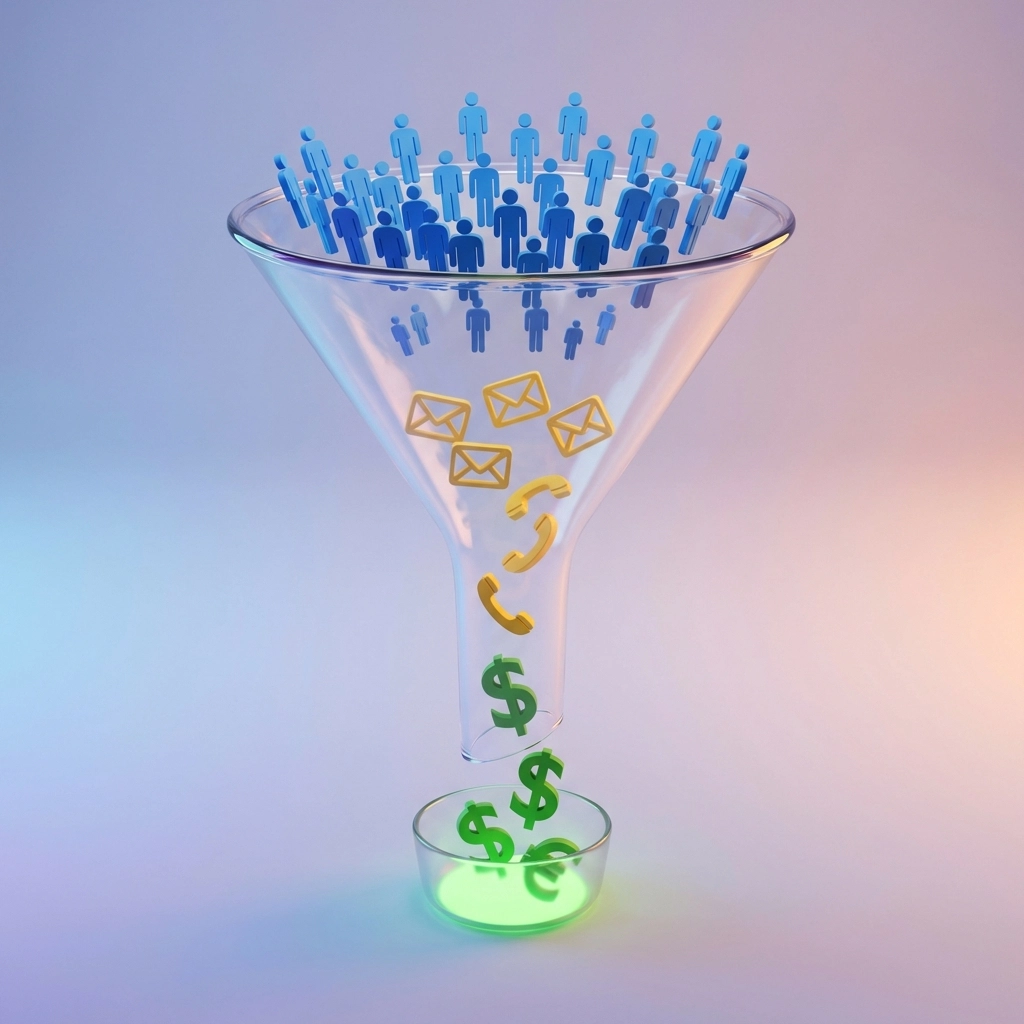
A marketing funnel is simply a visual way to understand your customer's journey from the moment they first hear about your business to when they become a loyal, paying client. It's called a "funnel" because it starts wide at the top (lots of people discovering you) and gets narrower as it goes down (fewer people actually buying).
Maybe 1,000 people see your social media post, 100 of them visit your website, 20 book a consultation, and 5 become customers. That's your funnel in action.
The beauty of understanding your funnel is that you can see exactly where people are dropping off and fix those weak spots. Instead of just hoping more leads will magically turn into customers, you can actually make it happen consistently.
The Four Stages Every Small Business Needs to Know
Every effective funnel has four main stages, and each one serves a specific purpose in guiding your potential customers toward a purchase.
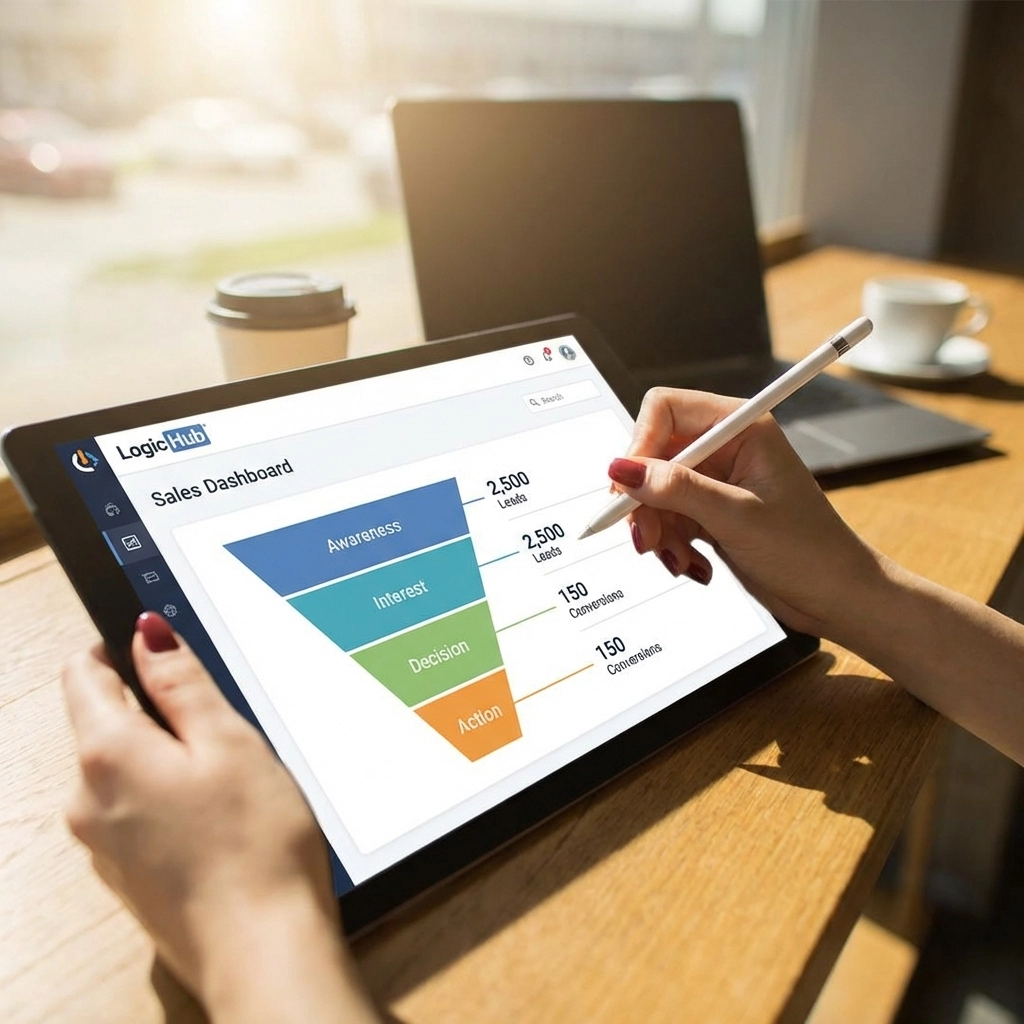
Stage 1: Awareness - Getting On Their Radar
This is where people first discover your business exists. They might find you through:
Google searches for services like yours
Social media posts or ads
Word-of-mouth referrals
Local directories or networking events
At this stage, people don't know much about you yet. They're just realizing they have a problem you might be able to solve. Your job here is to be helpful and visible, not pushy.
Stage 2: Interest - Building Trust and Connection
Now they know you exist, but they're still shopping around and comparing options. This is where you need to prove you understand their specific situation and can actually help them.
You do this by:
Sharing valuable content that addresses their pain points
Offering free resources or consultations
Showing social proof through testimonials and reviews
Following up consistently without being annoying
Stage 3: Decision - Making It Easy to Say Yes
They're almost ready to buy, but they need that final push. This stage is about removing any remaining objections and making the choice obvious.
Effective decision-stage strategies include:
Limited-time offers or bonuses
Clear pricing and package options
Strong guarantees or risk reversals
Customer success stories that match their situation
Stage 4: Action - Sealing the Deal and Beyond
This is where they actually become customers, but your funnel doesn't stop here. The action stage also includes:
Smooth onboarding processes
Follow-up sequences to ensure satisfaction
Opportunities for repeat business or referrals
Building long-term relationships

Why Small Businesses Need Funnels More Than Anyone
Here's something most small business owners don't realize: you're already competing with companies that have sophisticated funnel systems. When someone searches for your services, they're not just comparing you to other small businesses: they're comparing you to everyone, including larger companies with automated follow-up systems and polished customer journeys.
Research shows that 79% of marketing leads never convert into sales due to lack of lead nurturing. That's a massive opportunity for small businesses willing to create simple, effective funnels.
Consider this: if you can increase your conversion rate from just 2% to 5%, you'll more than double your revenue without spending more on advertising. That's the power of a well-designed funnel.
For Example: Sarah's Business
Let's look at how this works in practice. Sarah runs a physiotherapy clinic and was frustrated because she got plenty of inquiries but many people never booked appointments.
Her Old Process:
People found her through Google or referrals
They called or emailed with questions
She responded when she could between daily tasks
Many potential clients disappeared before booking
Her New Funnel:
Awareness: Sarah creates helpful content about common queries and posts consistently on social media and her blog
Interest: When people visit her website, they can download a free "product or service" guide in exchange for their email
Decision: Subscribers receive a helpful email series over 7 days, ending with an invitation to book a free 15-minute consultation call
Action: During the consultation, Sarah demonstrates her expertise and offers her assessment package with a guarantee
The result? Sarah's conversion rate went from about 15% of inquiries to over 40%, and she spends less time chasing leads because the system works automatically.

How Technology Makes Funnels Simple
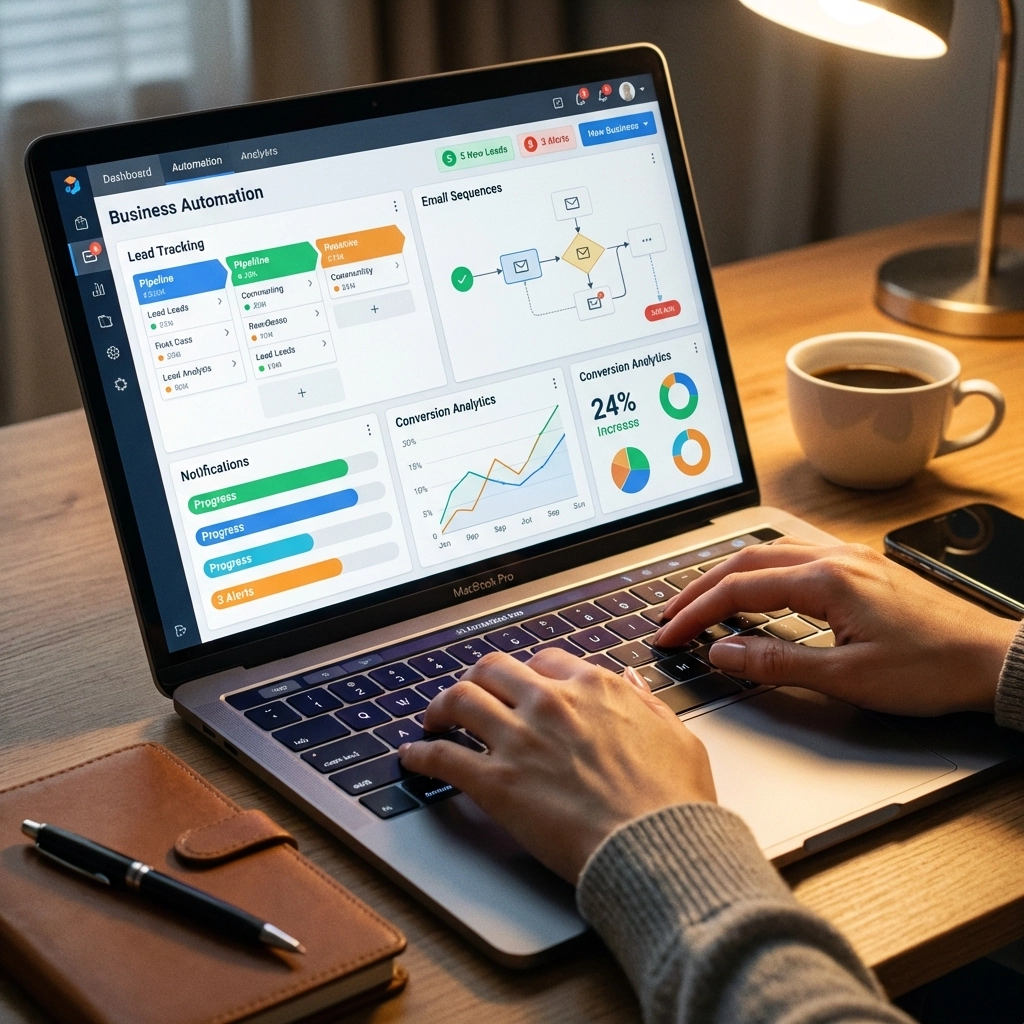
You might be thinking this sounds like a lot of work, but modern tools make funnel management much simpler than it used to be. Platforms like Logic Hub automate most of the heavy lifting for you.
Instead of manually sending follow-up emails or trying to remember where each lead is in your process, automation handles:
Sending the right message at the right time
Tracking which stage each lead is in
Following up with prospects who haven't responded
Moving people through your funnel automatically
This means you can focus on what you do best: serving your clients: while your funnel works 24/7 to convert leads into customers.
Best Practices That Actually Work
Keep It Simple
Your funnel doesn't need to be complicated to be effective. Start with the basic four stages and improve from there. Many successful small businesses use very simple funnels that focus on being helpful rather than clever.
Focus on One Clear Path
Don't give people too many options at each stage. Make it obvious what they should do next. If you offer five different ways to get started, most people will choose none of them.
Track Your Numbers
You need to know how many people enter each stage and how many move to the next. This data tells you where to focus your improvement efforts. If lots of people visit your website but few download your lead magnet, you need to work on that offer.
Test and Improve Gradually
Don't try to perfect everything at once. Make small changes and see what works. Maybe test different subject lines for your follow-up emails or try offering a different lead magnet.
Common Mistakes to Avoid
Trying to Convert Too Fast: Don't ask people to buy from you the first time they hear about your business. Build trust first.
Ignoring Follow-Up: Most sales happen after multiple touchpoints, but many small businesses give up after one or two attempts.
Making It About You: Your funnel should focus on solving your customer's problems, not showcasing how great your business is.
Forgetting Mobile Users: More than half of your leads will interact with your funnel on their phones. Make sure everything works smoothly on mobile devices.
Getting Started With Your First Funnel
You don't need to build a perfect funnel right away. Start with these three simple steps:
Map Your Current Process: Write down how customers currently find you and become clients
Identify the Biggest Gap: Where do most potential customers disappear? Focus there first
Create One Simple Automation: Maybe it's a welcome email series for new leads or a follow-up sequence for consultation bookings
Remember, a simple funnel that actually works is infinitely better than a complex one that never gets implemented.
Your Next Steps
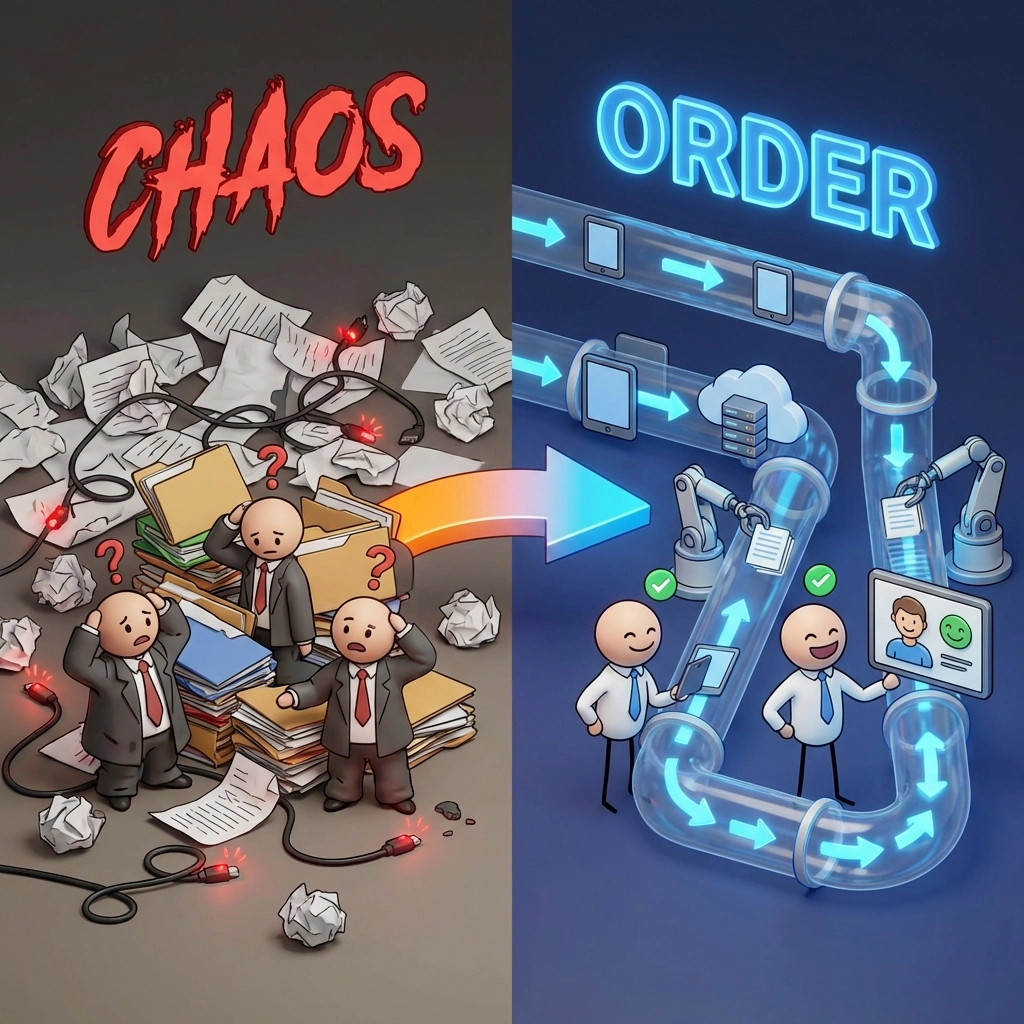
Funnels aren't magic, but they are powerful when done right. They help you create predictable, repeatable systems for turning leads into customers without constantly chasing after new business.
The key is to start simple and improve over time. Every small business needs a way to nurture leads and guide them toward becoming customers. The question isn't whether you need a funnel: it's whether you'll create one intentionally or let it happen by accident.
Ready to see how automated funnels can work for your business? Explore our demo to discover how Logic Hub makes funnel management simple for small businesses like yours.
Your potential customers are out there right now, looking for solutions you provide. A well-designed funnel ensures they find you, trust you, and choose you when they're ready to buy.

© 2025 - All Rights Reserved.
Facebook
Instagram
LinkedIn